Mental wellbeing app for young people and family support
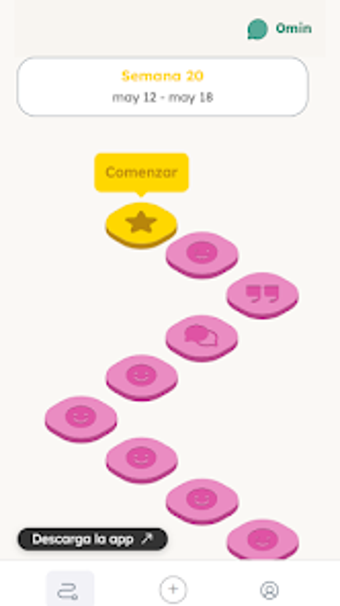
Offers on-demand contact with therapists via chat, voice notes, and video calls, plus mood tracking and guided activities to support daily emotional care. Miinta, from Kidovo Tech S.L., appears on Android as a mental-health tool aimed at schools, families, and young people. Key components include an emotional diary, diagnostic evaluations, and activity plans based on CBT and mindfulness. It fits parents, educators, and teens who need accessible accompaniment and coordinated family support in non-emergency situations.
On-demand therapist contact matches irregular emotional needs
The app gives direct communication with licensed professionals through text, voice notes, and video calls, and it advertises no-wait access to therapists. That access model lets a young person or parent send messages outside fixed appointment hours and receive ongoing guidance, which the platform highlights as an alternative to traditional waiting lists. The chat workflow supports asynchronous conversation, which suits fluctuating emotional moments rather than a fixed clinic schedule.
Coordinated family and school support helps everyday monitoring
Miinta links individual care to educational centres and family networks, offering diagnostic tests and prevention services for students. The integration described enables schools to participate in detection and follow-up, while parents can access tools designed for children aged eight and up. For families managing a child’s emotional development, that coordinated approach organizes reports and interventions inside the same account structure rather than scattering notes across multiple providers.
Evidence-based, neuroaffirming methods focus on accessibility and limits
The platform bases activities on Cognitive Behavioral Therapy and mindfulness and states neuroaffirming care for ASD and ADHD provided by professionals with lived experience. Privacy and confidentiality are explicit, and the service clarifies it is not an emergency line, directing users to local emergency numbers for crises. That combination supports regular emotional work while requiring users to keep separate crisis plans for urgent situations.
To sum up, Miinta serves families and schools needing flexible emotional support
Miinta is a useful option for parents, educators, and young people who want continuous therapist access and school-linked screening; it supports day-to-day emotional tracking and guided practice. One caveat is that it does not replace emergency services, so users should keep local crisis contacts ready. Pro tip: enable the app’s daily notifications to maintain a steady habit of mood logging and brief exercises.